August and I have been reading Dracula together, taking turns reading aloud. My paperback was falling apart.
The plan was to repair the loose book, replace the paperback cover with a cloth-covered hardback, and give it artwork that suited the story. It became a Halloween project with plenty of conversation about castles, vampires, and what actually makes a book scary.
Starting with a book in pieces
Once the old cover came off, the problem was easy to see: the book had separated into three pieces. Before we could think about a new cover, we needed to get those pages back together.
We held the book in the wooden book vise and worked on the old glue along the spine. A chisel is a familiar tool in this workshop, although I hadn't used one for bookbinding before. Then we added glue and a strip of linen across the spine to help hold the book together.
There is a satisfying moment when the loose pieces start behaving like a book again. The repair was holding together; now it needed a new cover.
Building the hardback cover
We used relatively thin bookboard for the cover, measuring the pieces against the actual book. The cover has three parts: a front board, a back board, and a narrower spine piece.
Those pieces need small gaps between them. The separate pieces get glued down with little spaces that make the cover flexible. The cloth joins everything together while allowing the boards to open.
We laid out the parts on the bookcloth, glued them in place, and trimmed the material so there was enough left to turn over the edges. I usually fold the long sides first, using a bone folder to crease the cloth and work it neatly around the boards. The corners take a little attention so they fold over cleanly.
This was a good part of the project to work on together. August could help fold and smooth the cloth while we talked through what each part was doing.
The endpapers took a second attempt
The first attempt at attaching the book to its new cover did not go as planned. The endpapers didn't stick properly, and the assembly got out of alignment.
We took it apart and started that stage again with new endpapers. That is in the video too. It is part of making something: sometimes the useful next step is to stop, undo the bit that isn't working, and try again.
On the second attempt, we worked the glue across the attachment area, checked the fit, and brought the book and cover together. The endpapers finish the inside of the cover and help connect it to the pages. With everything attached, we could finally open and close the book as a hardback.
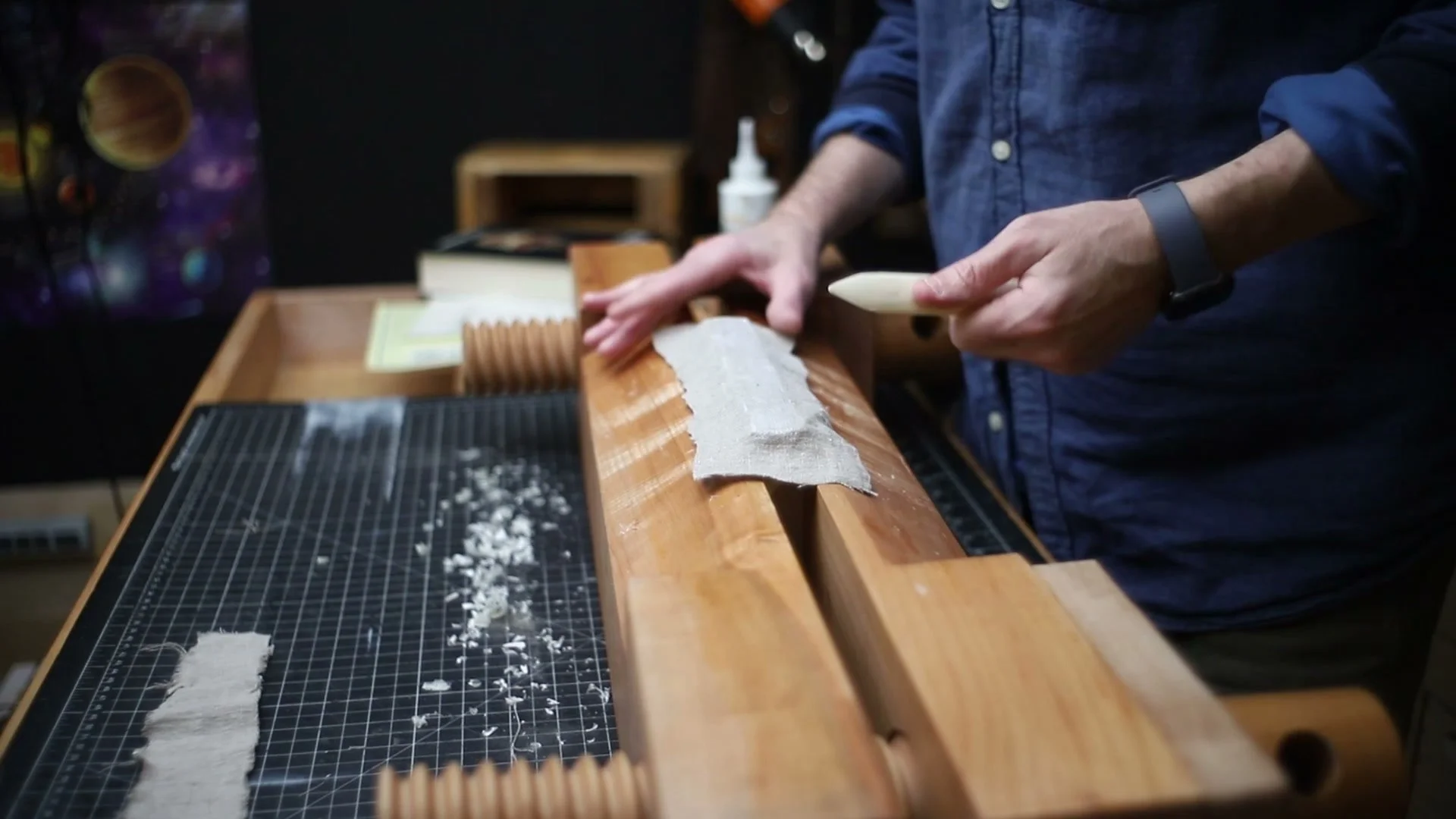
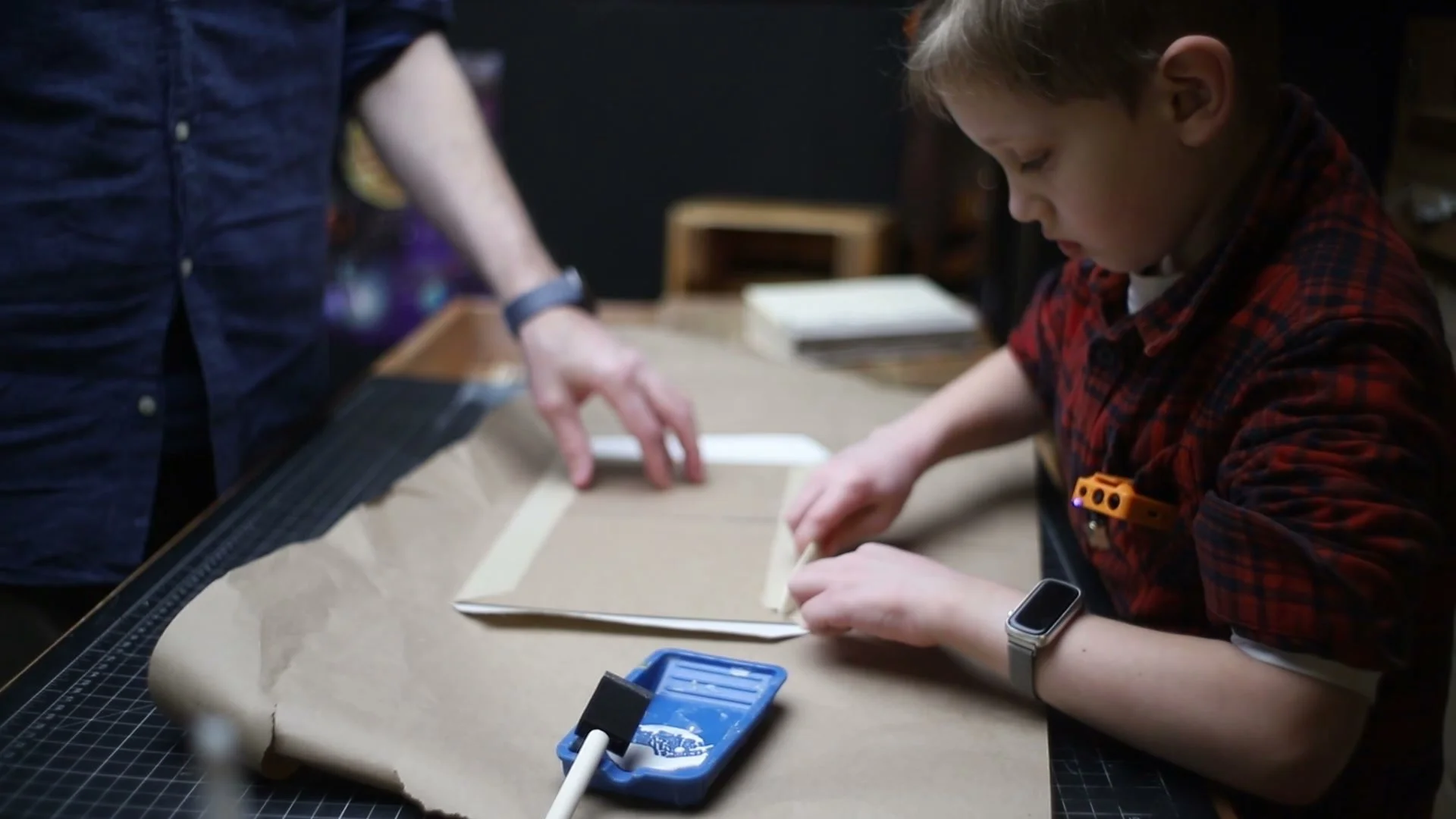
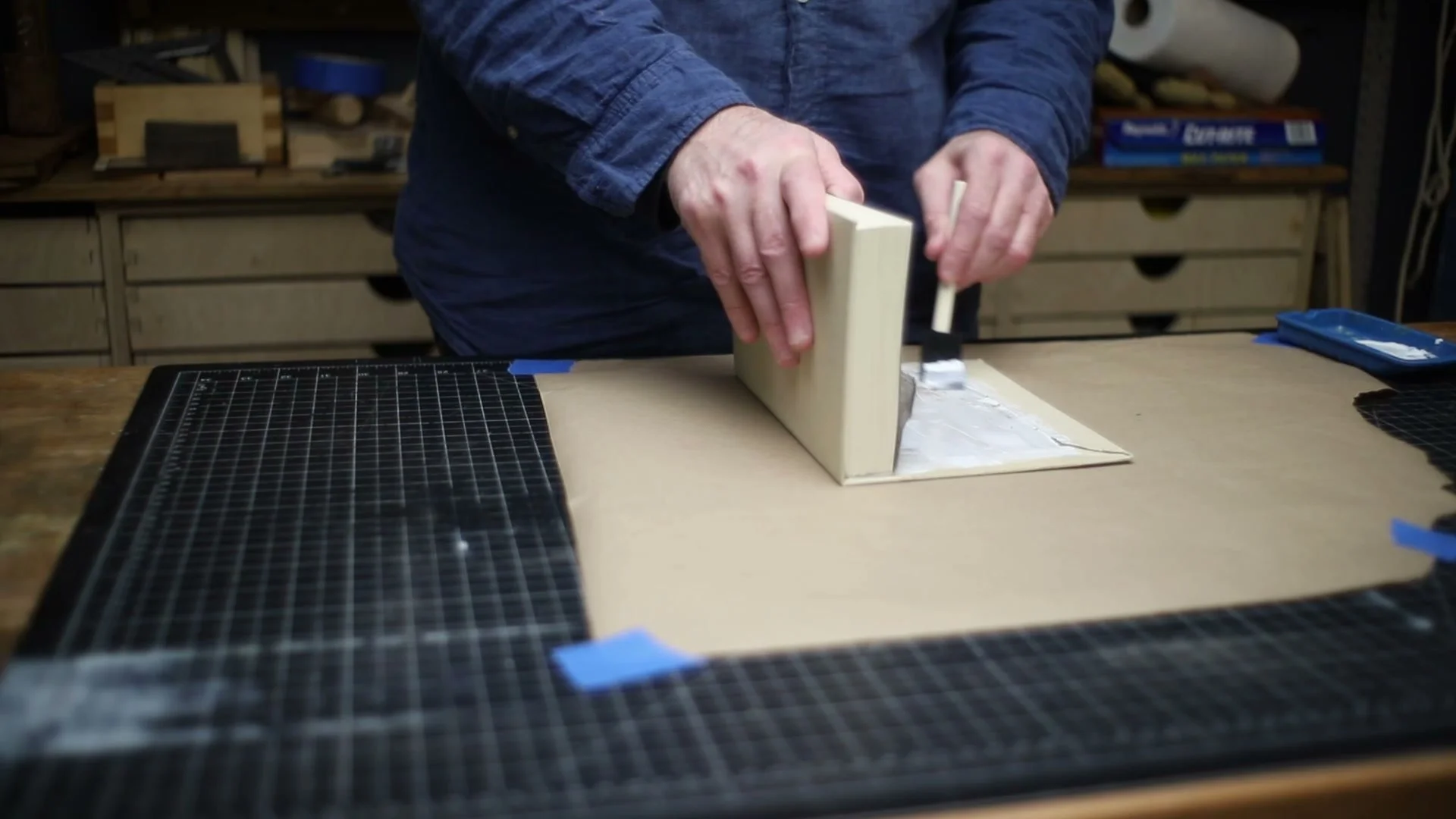
From left: reinforcing the spine with linen, folding the bookcloth, and attaching the book with new endpapers.
A new face for Dracula
For the outside, we added a blue illustrated cover with a castle, moonlight, and bare trees. A matching title label on the spine finishes it off. The cream-colored cloth makes a simple border around the artwork.
Placed beside the old paperback cover, the difference is striking. Inside are the same pages we have been reading. Outside, the book now has a cover we made together.
The finishing shots are some of my favorites because you can see the cloth texture, the new spine, and the whole book sitting on the wooden vise that helped us repair it.
A book worth talking about
A lot of the conversation at the bench was about Dracula itself. We talked about Jonathan Harker arriving at the castle, the shaving mirror, and Dracula climbing down the walls. We also wandered into The Wizard of Oz and the difference between a frightening face on a screen and tension in a story.
One thing we both enjoyed about Dracula was the group of people working together, each bringing something to the story. Reading it aloud gave us plenty to discuss while the glue and cloth went on.
That is what I like about this project. We had a damaged paperback, some bookboard, cloth, glue, and time at the bench. Now we have a hardback copy with a story behind its cover as well as inside it.
What paperback on your shelf would you give a new cover?
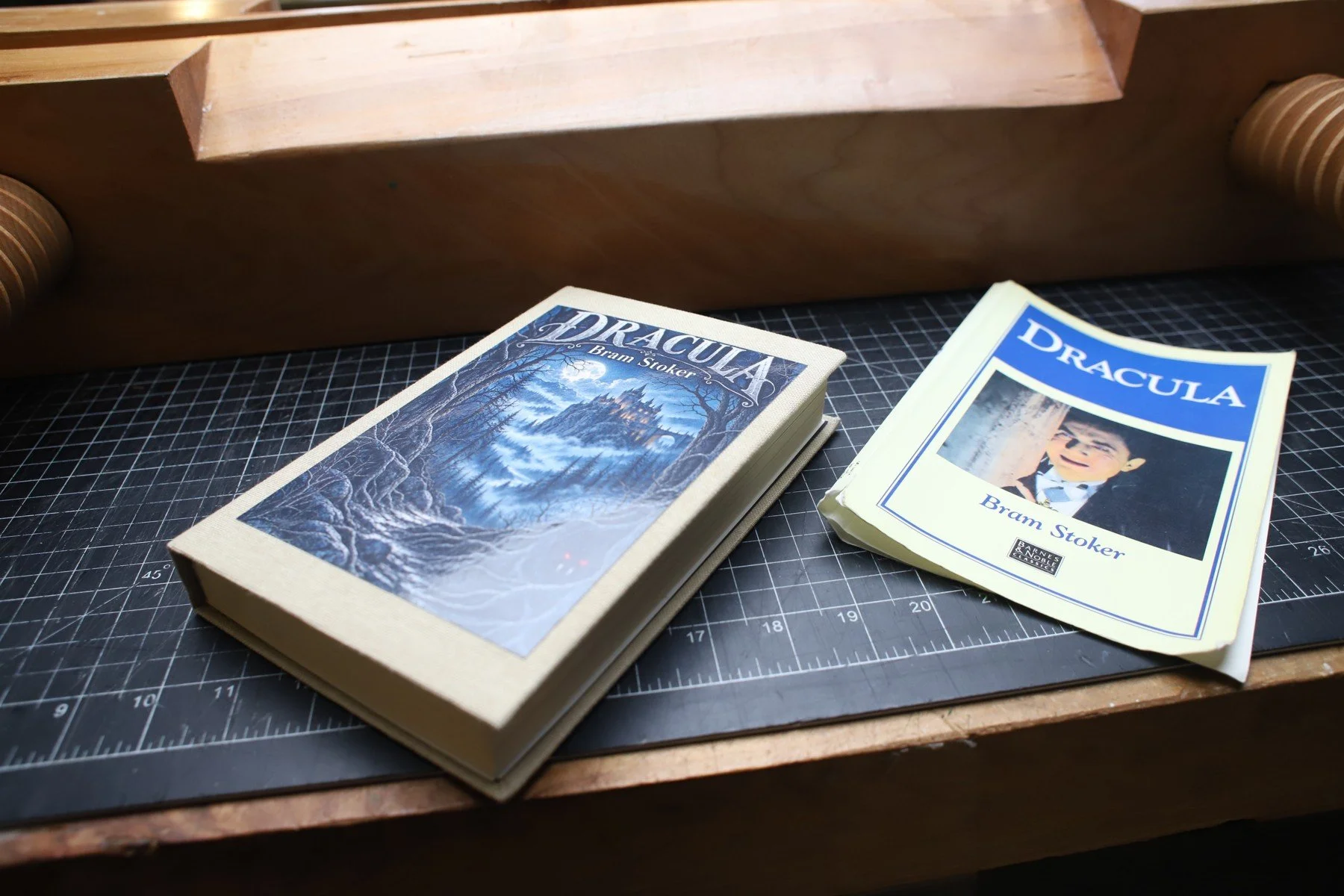
The finished cloth-covered hardback beside the original paperback cover.